
Hart County Criminal Court Cases
Hart County Superior Court is the county's felony trial court and part of the Northern Judicial Circuit. Its clerk keeps criminal filings, charging papers, docket events, pleas, verdicts, sentences, and related public documents. The clerk also reports criminal records and dispositions to the Georgia Crime Information Center. A felony file therefore belongs with the clerk, not with the sheriff simply because a deputy made the arrest.
Other courts create distinct records. Magistrate Court issues misdemeanor and felony warrants and conducts first appearances, pre-warrant proceedings, and bond hearings. Probate Court hears traffic, game, and fish matters. Hartwell and Royston municipal court records stay with the city unless a state charge proceeds in county court. Identifying the court prevents a false no-match.
The official Magistrate Court page shows the local source for warrant and bond functions.
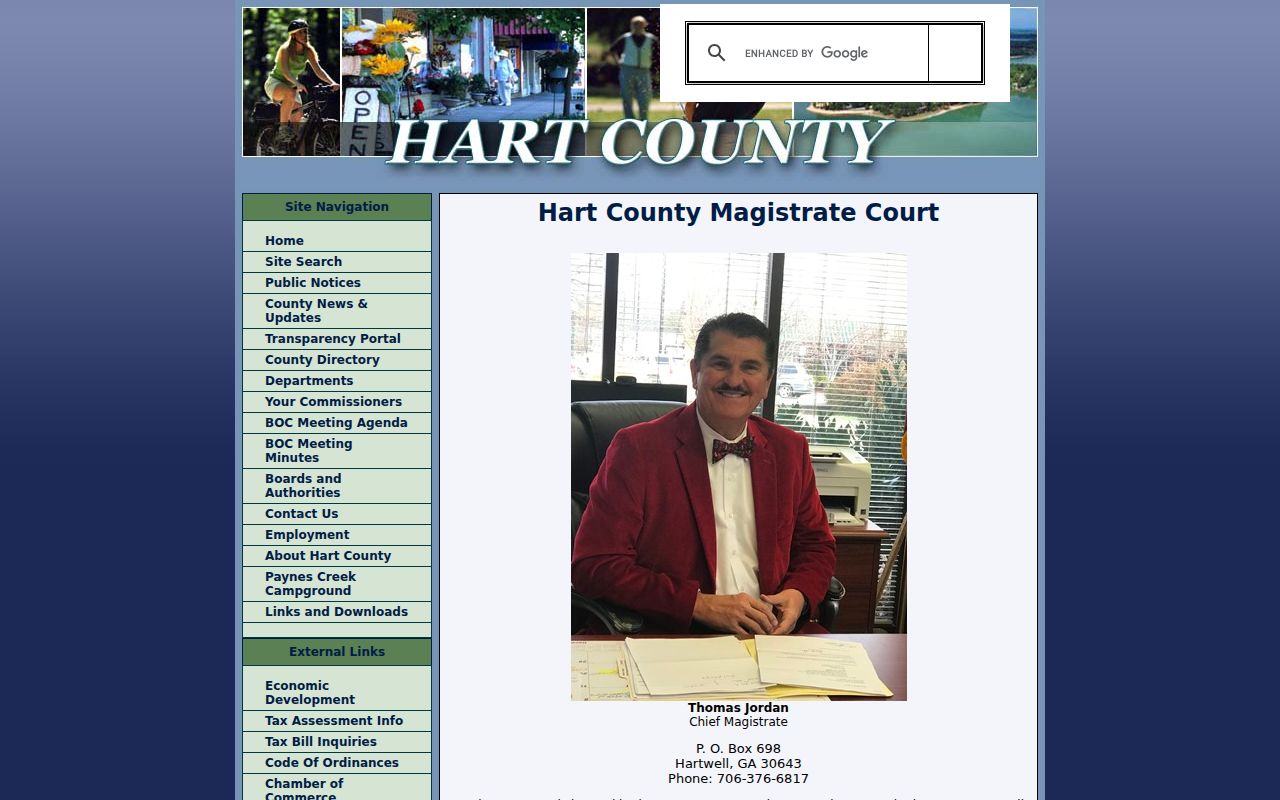
That early record should later be reconciled with the filed Superior Court case.
The courthouse locations also differ. Magistrate Court describes itself on the downtown square, while the Superior and Probate Court offices list the Courthouse Annex on West Franklin Street. Confirm which counter holds the requested event before visiting. Published sources did not supply reliable parking, security-screening, or device rules, so call the office for current visitor details.
Hart Court Files Through ICON
The clerk directs remote criminal and civil researchers to ICON, but does not publish a frictionless public search link. Call 706-376-7189 and ask the clerk's office to set up research access. Confirm account requirements, document access, and current charges before relying on the service. Georgia has no single comprehensive public trial-court docket that replaces this local route.
Use a full name, case number, and an approximate filing year when available. Name-only results can join different people or miss spelling variants. The clerk's personal setup help is important here: remote access begins with the local office, not with Kofile or a statewide case-search box.
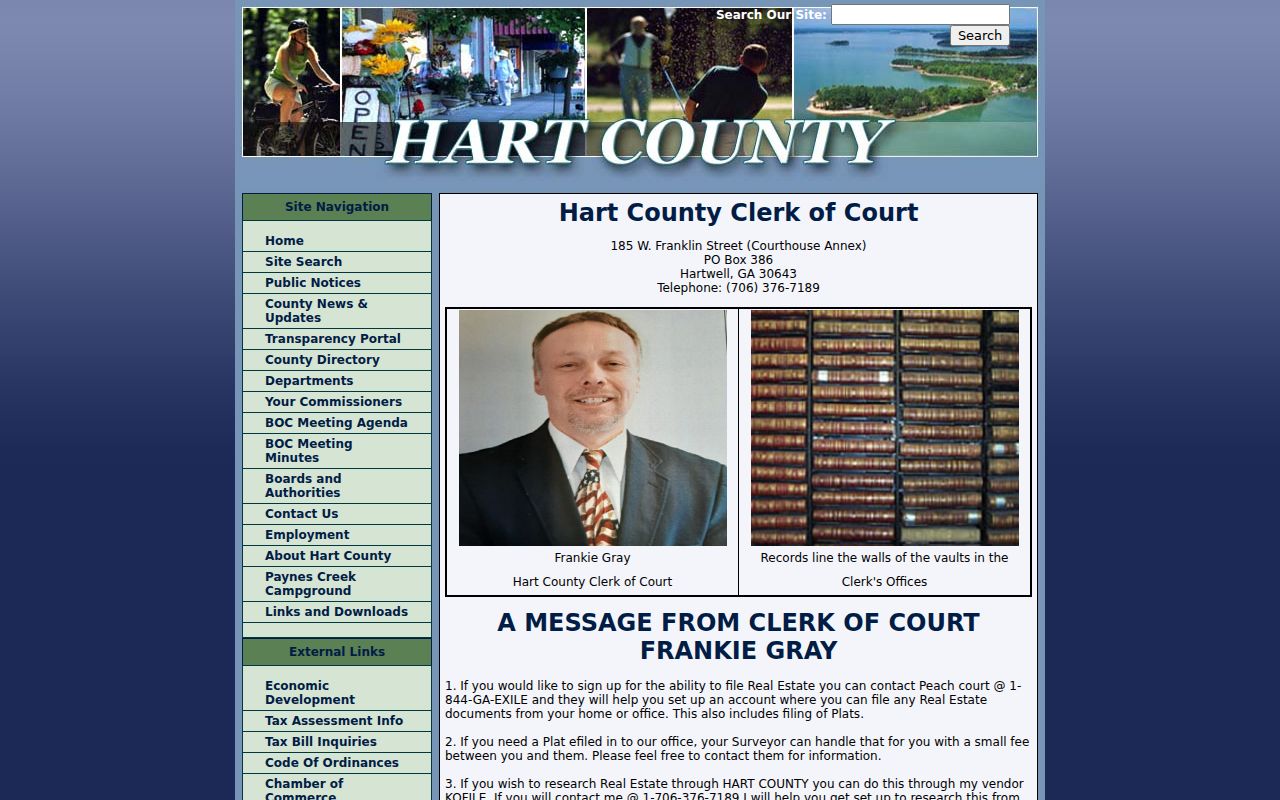
The linked clerk page should be checked again before a search because vendor access and copy terms can change.
Searching Hart County Case Records
Start with the court that created the event, then move to the clerk when a prosecution has been filed. ICON is the remote route for Hart criminal and civil research. The courthouse counter is the fallback for records omitted from its index, older files, and copies that must be certified.
- Identify Superior, Magistrate, Probate, or municipal court from the charge, citation, or warrant paperwork.
- Call the Superior Court clerk for ICON setup when the matter is a filed county criminal case.
- Search with the case number when possible, or match a name with filing date, charge, and court.
- Open the docket and read each count through its latest charge-level disposition.
- Ask the clerk to inspect an omitted file or provide plain or certified copies, and confirm the exact fee first.
| Field Label | Type | Required | Notes |
|---|---|---|---|
| Case number | Text | Best identifier | Use the court's full number and year. |
| Party name | Text | Search option | Try full and prior name forms. |
| Filing date | Date | Filter | Narrows common-name results. |
| Case category | Display/filter | Verify | Confirm the criminal division and court. |
| Status or judge | Display | Verify | Useful for matching, not proof of outcome. |
Hart's Franklin Street File Counter
When ICON misses a file, take the case number, full name, and approximate date to the Clerk of Superior Court at 185 West Franklin Street, Hartwell, GA 30643. Public hours are 8:30 a.m. to 5:00 p.m. The clerk says most court records may be viewed during regular hours. Ask whether the requested item is available for inspection, whether document images exist, and what a plain or certified copy costs. No official certified-copy fee was located in the research.
The county page depicts a wall-lined records vault, a useful reminder that a remote index is not the whole court file. Do not substitute Kofile. Hart's clerk describes that product for deeds, liens, and plats, not criminal dockets.
Prepare a focused counter request before the visit. State the court, case number if known, party name, approximate filing year, and the exact document sought. A docket sheet may be enough to identify the disposition, while a charging instrument or sentencing order answers a different question. Ask for inspection first when the needed page is uncertain. Once identified, specify whether an ordinary copy will work or whether the recipient requires a clerk-certified copy.
Keep the request tied to a public case. Adoption and juvenile matters are among the files the clerk maintains, but their inclusion in the office's workload does not make them open criminal research. Staff can explain whether a named file exists, which court owns it, and which access rule applies.
Probate Court's official page documents its separate traffic, game, and fish docket.
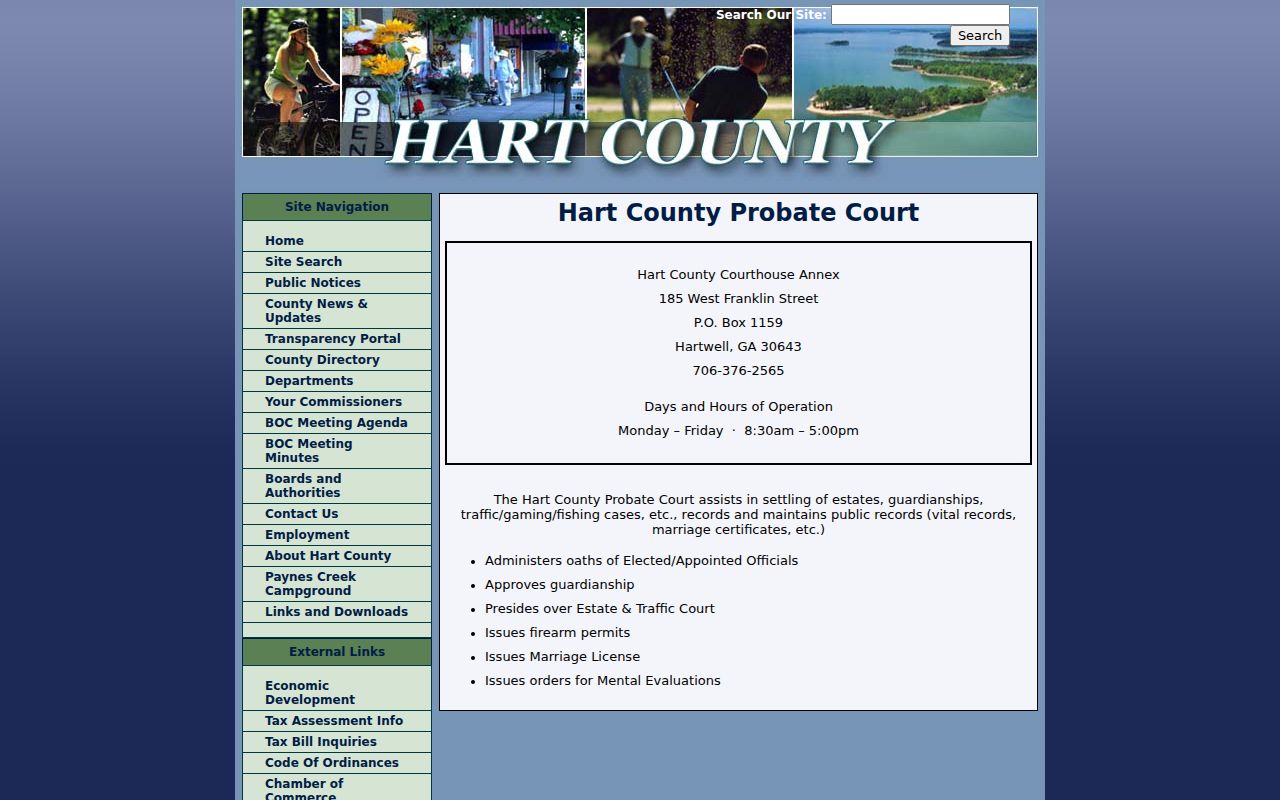
This source helps route a citation before requesting the wrong court file.
Inside a Hart County Case File
A docket header identifies the case, filing date, assigned judge, category, and status. The deeper value lies in count-level entries. Charging instruments, motions, hearing records, pleas, verdicts, and sentencing documents show how the allegation changed and ended. Financial fields may show bond, fines, fees, restitution, or balances when public.
| Case number and court | Identifies the file and its legal custodian. |
|---|---|
| Charging document | An accusation or indictment states the filed counts. |
| Docket events | Lists filings, motions, hearings, pleas, and later activity. |
| Charge fields | Shows description, statute, count, and felony or misdemeanor level. |
| Disposition and judgment | Records dismissal, plea, acquittal, conviction, or another result by count. |
| Sentence and conditions | May state custody, probation, restitution, fines, and related terms. |
Hart Court Outcomes in Plain Terms
One case may end differently on each count. Read the final entry for every charge and do not turn a procedural status into a conviction. Several Georgia terms are especially important in Hart County court research.
- Nolle prosequi
- The prosecutor elects not to continue that charge.
- No bill
- The grand jury declines to return an indictment.
- Dead docket
- The prosecution is inactive, but not finally adjudicated.
- Acquittal
- A not-guilty outcome after adjudication.
- Disposition
- The final procedural result for a charge.
Dismissal, no bill, nolle prosequi, and acquittal are not convictions. A dead-docket entry is also not a guilty judgment. If a GCIC history lacks the result, obtain a certified disposition and ask the contributing court or agency to transmit the correction.
Bond and sentence fields also need context. Bond governs release while a charge is pending and is not a punishment. A sentence follows a conviction or qualifying plea and may combine confinement, probation, restitution, fines, or other conditions. Concurrent sentences run at the same time; consecutive sentences run one after another. Read the signed order instead of estimating the effect from a docket label.
How a Criminal Case Moves
Magistrate Court may begin the record with a warrant, first appearance, and bond decision. Prosecutors then decide whether to file an accusation or seek a grand-jury indictment. Superior Court records arraignment, motions, hearings, a plea or trial, and the final disposition and sentence. An appeal or supervision event may follow. No fixed local timeline was published, so a docket should be read by event date rather than by an assumed schedule.
Case flow: Arrest or warrant › Booking › First appearance and bond › Prosecutor review › Accusation or indictment › Arraignment › Plea or trial › Disposition and sentence
Georgia's judicial branch explains how these court classes divide their work statewide.
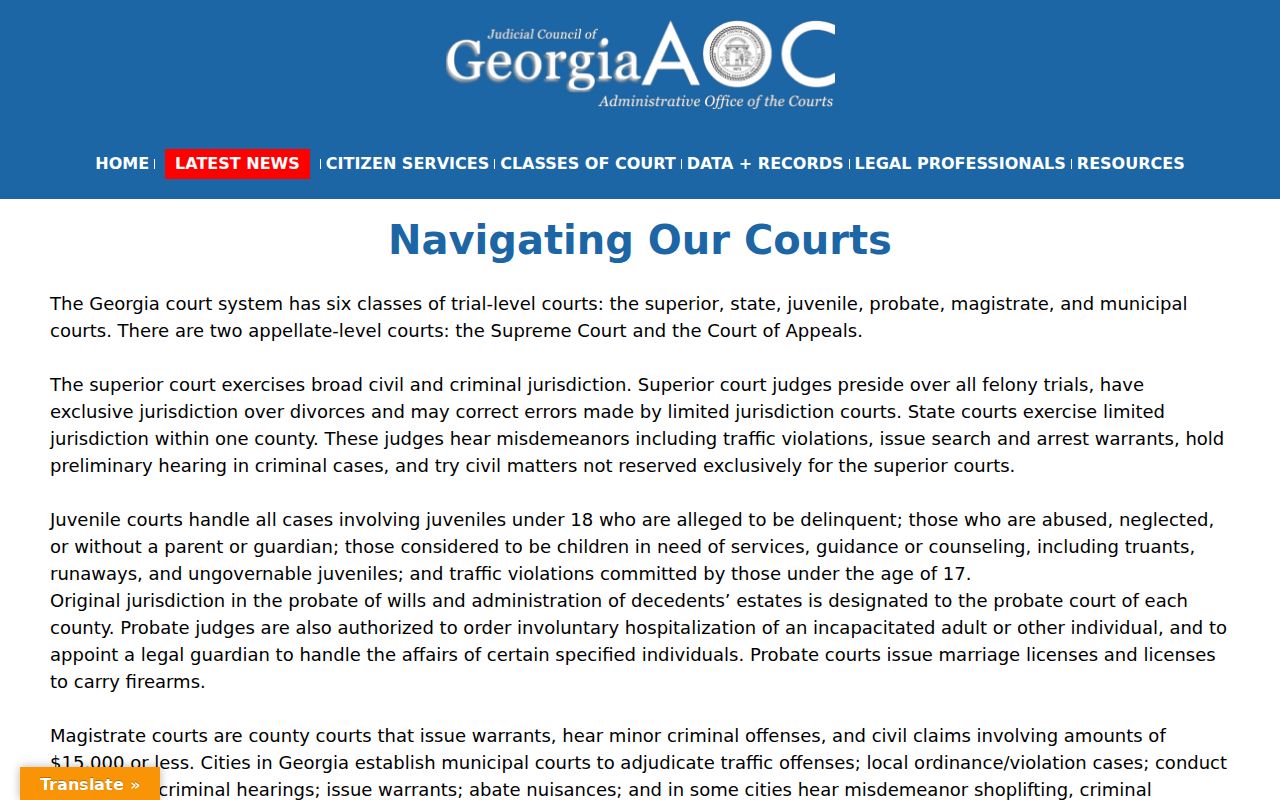
The Hart clerk remains the source for the actual local docket and disposition.
Hart Dispositions and GCIC Entries
The Hart court file answers what happened in a specific prosecution. A Georgia Crime Information Center history answers which fingerprint-linked arrest cycles and outcomes were reported statewide for an identity. Those records overlap, but they are not interchangeable. Booking charges can be amended, dismissed, or replaced before the case reaches judgment.
Compare the clerk's final count-level disposition with the GCIC entry. If a result is absent or wrong, GCIC directs the person to the submitting court or agency because it cannot rewrite another agency's data without documentation or authorization. Eligible records may be restricted under Georgia's record-restriction process, but restriction is not the same as destroying every underlying file.
Use the court case number to keep this review precise. A statewide history may organize data by an arrest cycle, SID, FBI number, or Offender Tracking Number instead. The labels differ because the systems answer different questions. The clerk can certify the Hart outcome, while GCIC maintains the statewide identity-linked compilation.
Note: A booking charge describes the intake allegation; the Hart County court disposition shows how the filed charge actually ended.
Hart Cases in Northern Circuit
Hart County belongs to Georgia's Northern Judicial Circuit. The circuit district attorney prosecutes qualifying county charges, while the circuit public defender provides an application route for eligible defendants. Their records and roles differ from the clerk's neutral custody of the court file. The official Hart public defender page lists its Royston office and English and Spanish applications.
The circuit prosecutor's official site identifies the office serving Hart County.
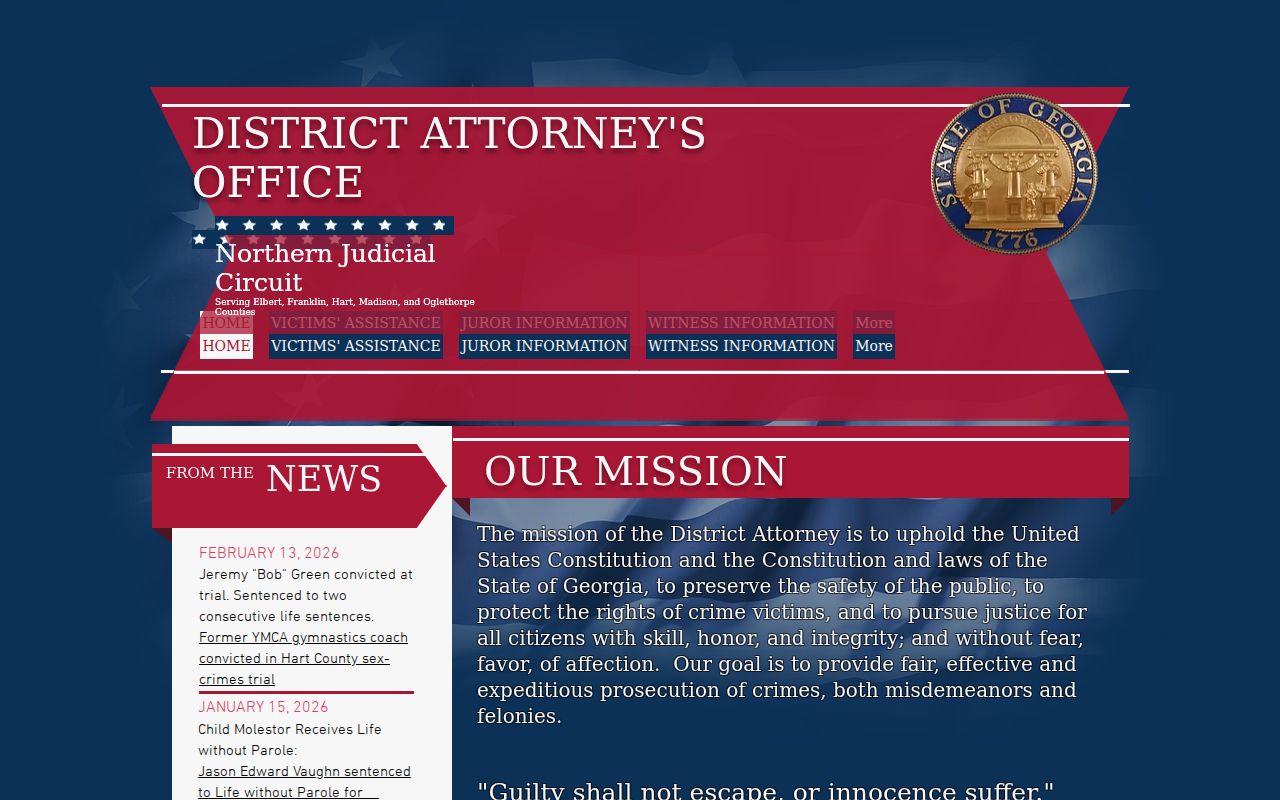
Prosecutor information clarifies office routing, but the clerk supplies the public docket.
Do not ask either lawyer's office to replace a clerk docket search. Use the case file for public procedural history and the assigned lawyer for advice in an active matter. Prosecutor open-records requests may also be limited by active-case and investigative exemptions.
The public defender's Hart page provides the separate defense application channel.
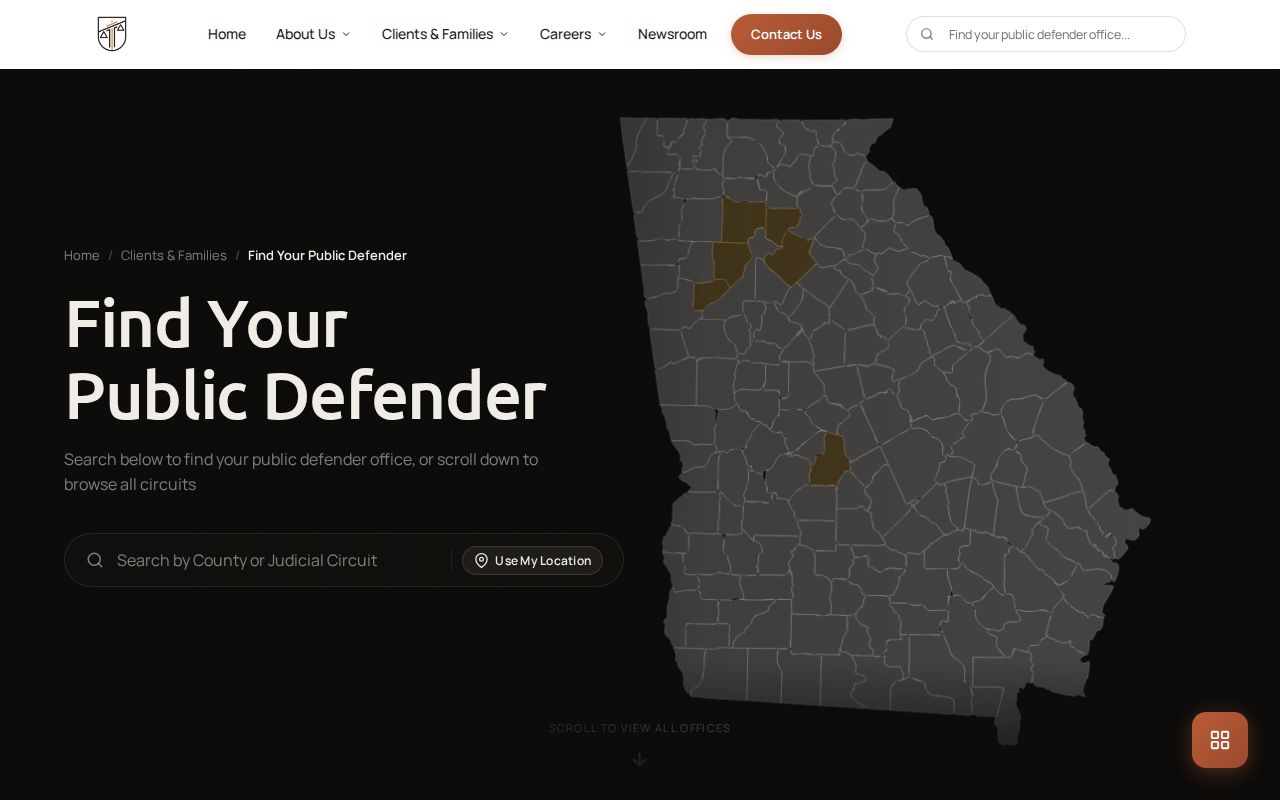
This role should not be confused with public-record access through the clerk.
Case Record Access & Restrictions
The Georgia Open Records Act favors public inspection while preserving exemptions, redaction rules, and lawful costs. Most Hart court records are public, but that rule does not expose sealed or restricted material. Juvenile information, full Social Security numbers, victim or minor details, medical data, and protected investigative facts may be withheld or redacted.
A blank ICON result can mean the file is older, not indexed, held by another court, sealed, or entered under a different name. Contact the clerk rather than treating a no-match as proof that no case exists. Ask for the specific file and date range, then let the custodian explain any access limit.
Online redaction and counter access may also differ. Ask whether a docket entry has a public document image, whether inspection is available only at the office, and whether the copy must be certified for its intended official use. When the clerk withholds an item, request the legal basis and a redacted version of any separable public portion. Keep the response with the search notes.